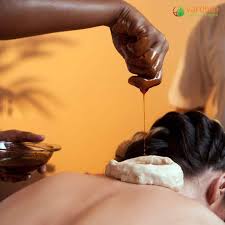
Marma Abhyanga (मर्माभ्यंग)
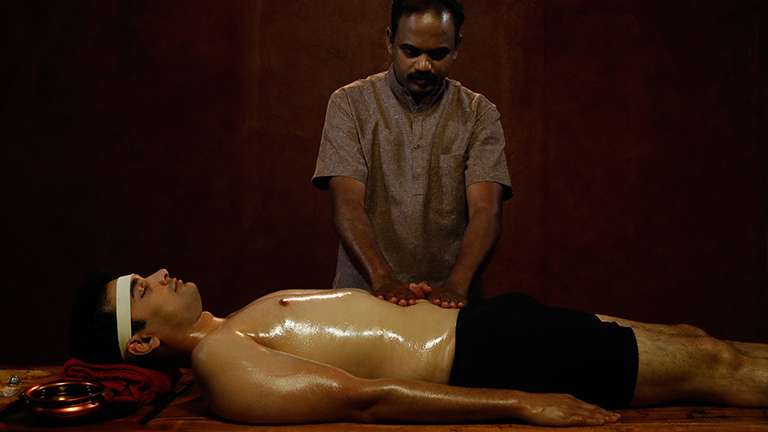
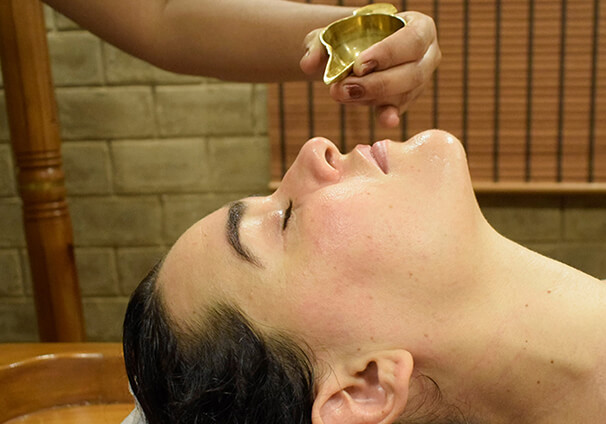
is a specialized Ayurvedic therapeutic massage that combines Marma therapy (stimulation of vital energy points in the body) with Abhyanga (medicated oil massage). It is a deeply rejuvenating treatment designed to balance the doshas, enhance energy flow, and promote healing at both the physical and subtle levels.
It is also an important part of Snehana. It is to be done prior to the principal therapies or otherwise it may act as a prime therapy for many diseases.
Precautions before abhyanga
Before the application of abhyanga, the following things are to be considered
1. The person should satisfy his natural urges.
2. A person should not be hungry
3. A person should not take food before the therapy
4. A person should be suitable for abhyanga.
Posture
The posture of the patient should be so that abhyanga can be done in the whole body in each and every part. In several postures, it should be done. Abhyanga, if applied over the entire body, seven postures are to be considered. Abhyanga in a particular part does not require all these seven postures. In such cases, according to the site, the physician should decide the specific posture.
Abhyanga can primarily be divided into 2 types:
Sarvangabhyanga
Ekangabhyanga
Virtues of abhyanga
1. Jarahara (rejuvenates the body)
2. Shramahara (delays in aging)
3. Vtahara (pacifies Vayu)
4. Drishtiprasadakara (provides better vision)
5. Pushtyayu (promotes long life)
6. Svapnakara (enhances good sleep)
7. Sutvaka dardhyakrit (enhances wrinkle-free soft skin and a strong body)
8. Klesha sahatva (increases tolerance power against exhaustion)
9. Vyayama sahatva (increases resistance against exertions)
10. Abhighata sahatva (increases tolerance against any trauma)
11. Kapha-Vata nirodhana (pacifies Kapha and Vata)
12. Mrija varna balaprada (promotes fair complexion, good strength)
Contra-indications of Abhyanga: Abhyanga should be avoided in the following