
In the Samudra Manthan, the Devas and Asuras use the mountain Mandara as the
churning rod and the serpent Vasuki as the rope to churn the ocean. The churning
produces numerous valuable items, including amrita, the celestial cow Kamadhenu, the
goddess Lakshmi, and many other divine treasures.
The Samudra Manthan story is rich in symbolism that aligns with the core principles of
Ayurveda. The emergence of divine treasures like amrita, Kamadhenu, Kalpavriksha, and
the concepts of rejuvenation, balance, and detoxification resonate deeply with Ayurvedic
practices. Ayurveda itself can be viewed as a “churning” of knowledge, drawing from
nature’s abundance to create health, harmony, and longevity. Thus, the Samudra Manthan
not only highlights the importance of natural resources but also symbolizes the Ayurvedic
pursuit of balance, vitality, and holistic healing.
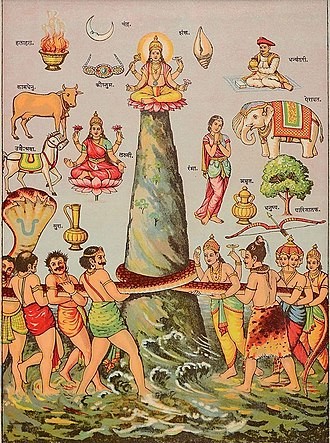
In the mythological event, the amrita
produced during the churning has the power to heal and rejuvenate. In Ayurveda, a
large emphasis is placed on using plants, herbs, and natural substances to promote
health, longevity, and healing. Many medicinal plants are said to possess qualities
that help restore Ojas (vital energy), balance the Doshas, and enhance Tejas (the
radiant energy associated with vitality).
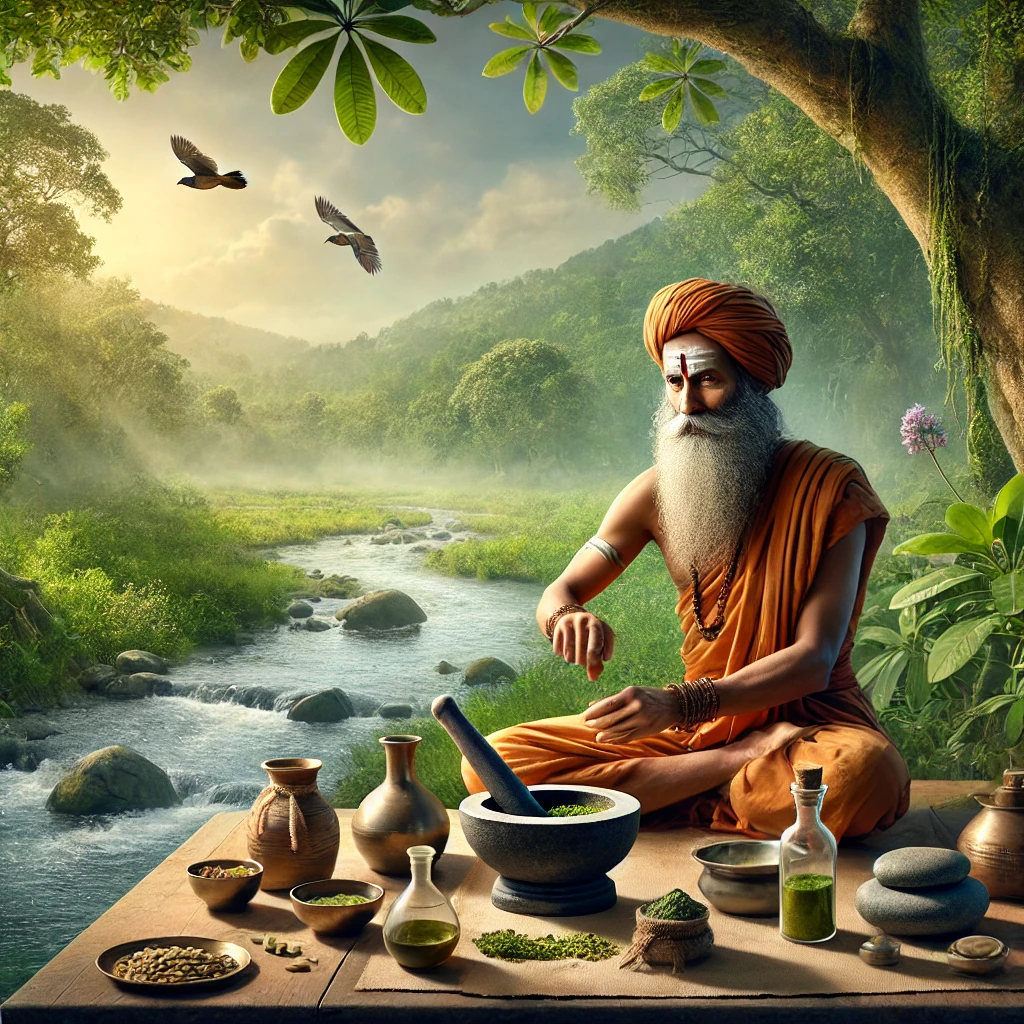
The churning of the ocean can be symbolically seen as the process of extracting the
most powerful and beneficial medicinal properties from nature. Ayurveda, like the
churning of the ocean, involves the extraction and purification of beneficial
substances (such as herbal oils, powders, and tinctures) to promote health.

During the churning, Halahala, a potent poison, also emerged. The Devas
were unable to handle the poison until Lord Shiva consumed it, protecting
the universe. In Ayurveda, there is also a focus on detoxification, especially in
treating toxins (ama) that accumulate in the body due to poor digestion and
imbalances in the doshas.
The story of Halahala illustrates the need for purification and balance in the
body, which is a central concept in Ayurveda. Just as Shiva consumed the
poison to neutralize its effects, Ayurvedic detoxification treatments like
Panchakarma work to cleanse the body of harmful substances and restore
health.